Header ImageHeader Image

The Problem

New managers run bad meetings and never learn why. Trybe set out to coach them in real time by transcribing the conversation, scoring team health, and surfacing the fix. We were building it before Otter and Granola made conversational meeting-AI a category. The bet on direction was right. The product stayed an MVP.

Context

  • Sole designer on a pre-revenue startup
  • We were building in a product category that did not exist yet
  • There was no PM layer, so I owned product direction alongside design

Constraints

  • Underlying technology was new and unstable, specs changed constantly
  • Design functioned simultaneously as user product and engineering reference model
  • Frequent pivots with limited runway

Results

  • Shipped desktop and mobile experiences
  • Delivered MVP branding including logo, color system, and voice
  • Used in investor pitches and customer demos

PART 1

Background

Trybe coached new managers while it transcribed their meetings. It turned live conversations into actionable metrics, insights, and next steps. The working MVP had to feel polished enough to pitch enterprise customers while staying nimble enough to match shifting engineering requirements.

PART 2

Basic structure, wireframes and low fidelity mockups

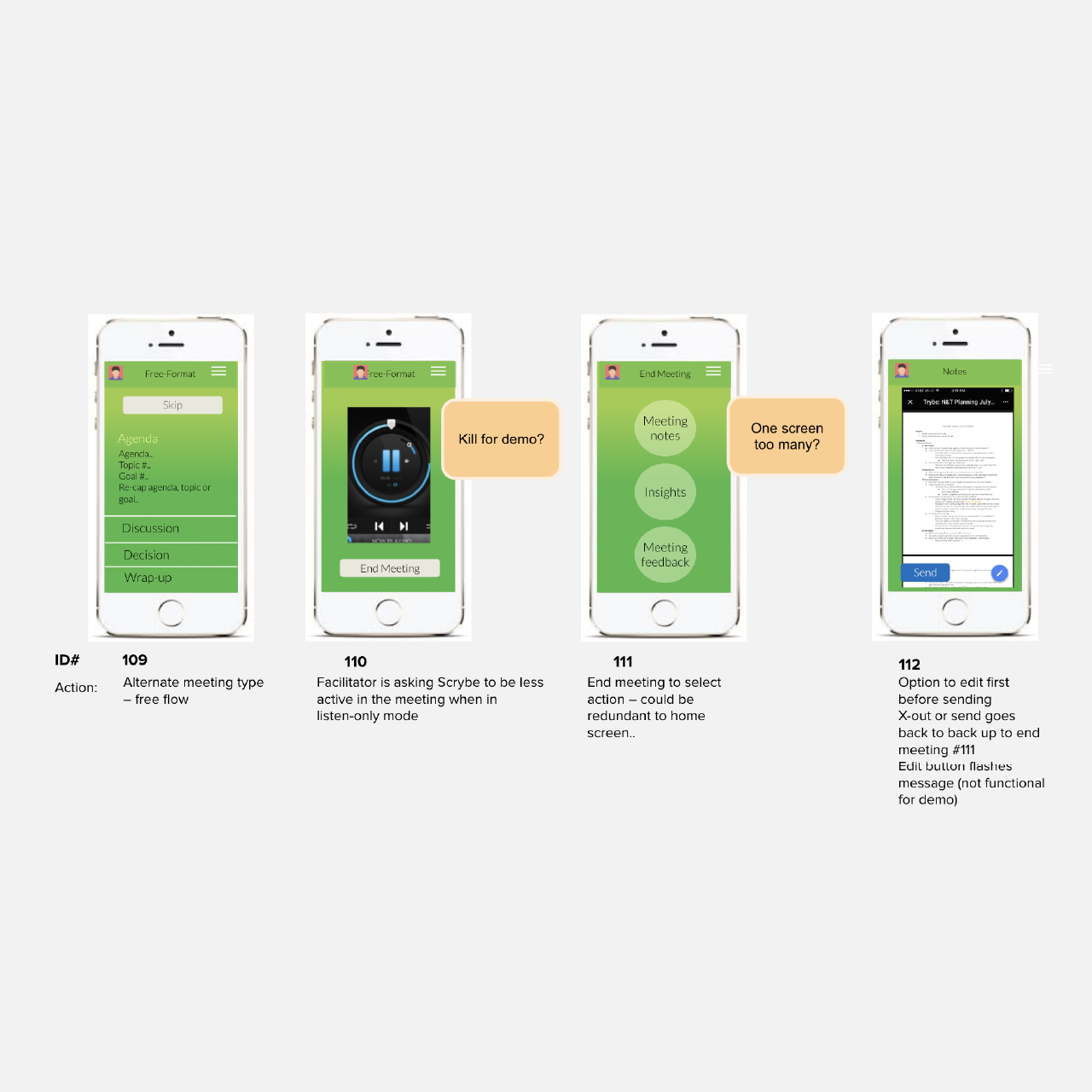
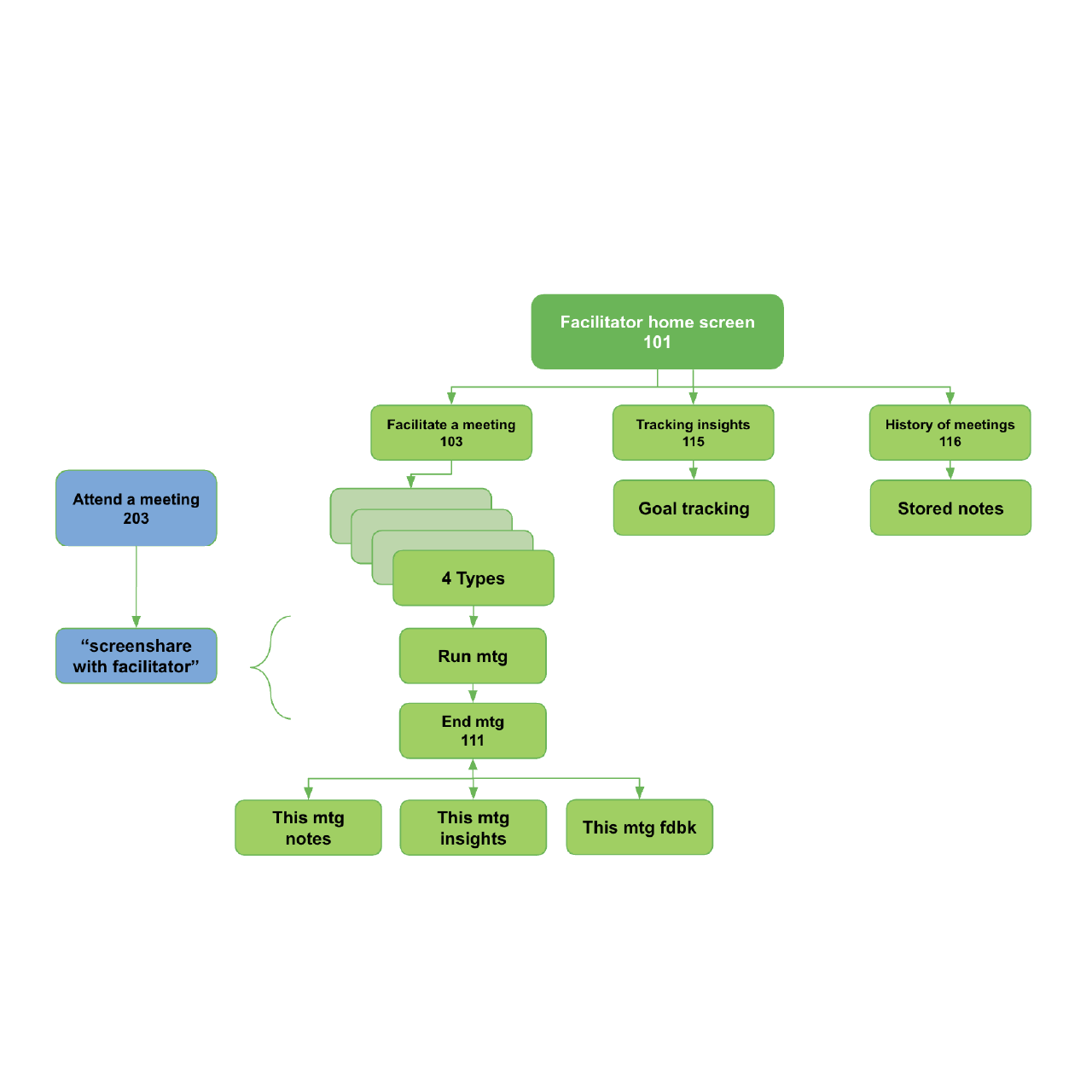
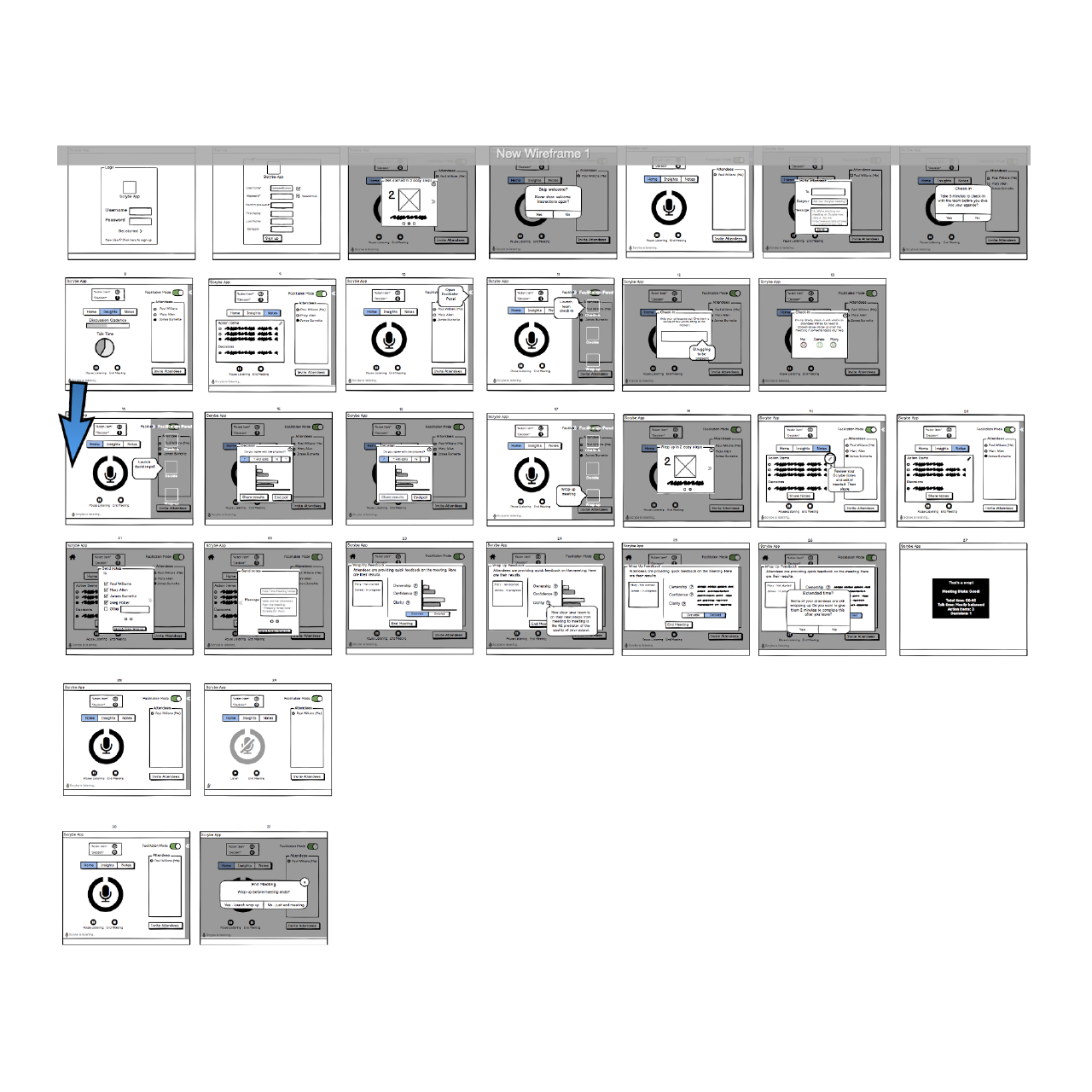
I mapped the meeting as a flow before committing to any UI. Initiation, scheduling, agenda, live recording, and analytics all got wired in low fidelity first, so the structure could survive the weekly spec changes.
PART 3

Mobile Meeting

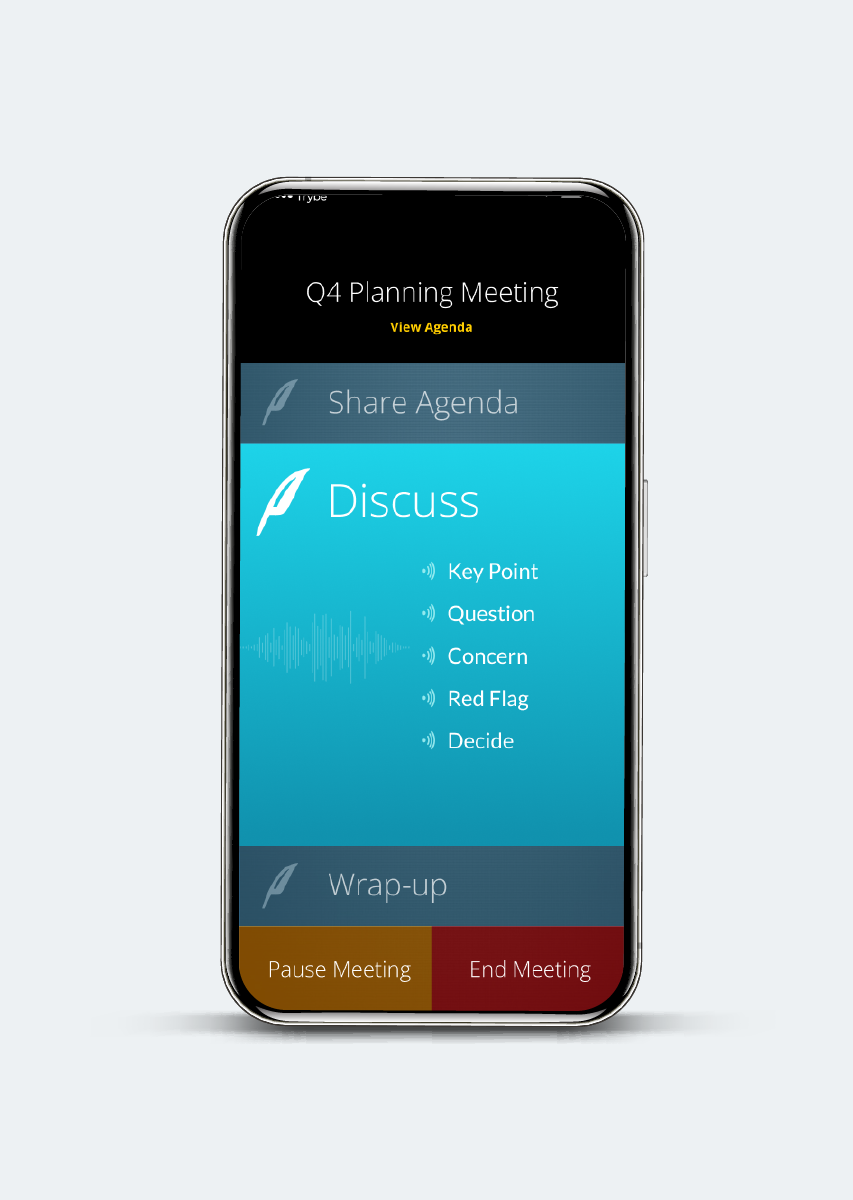
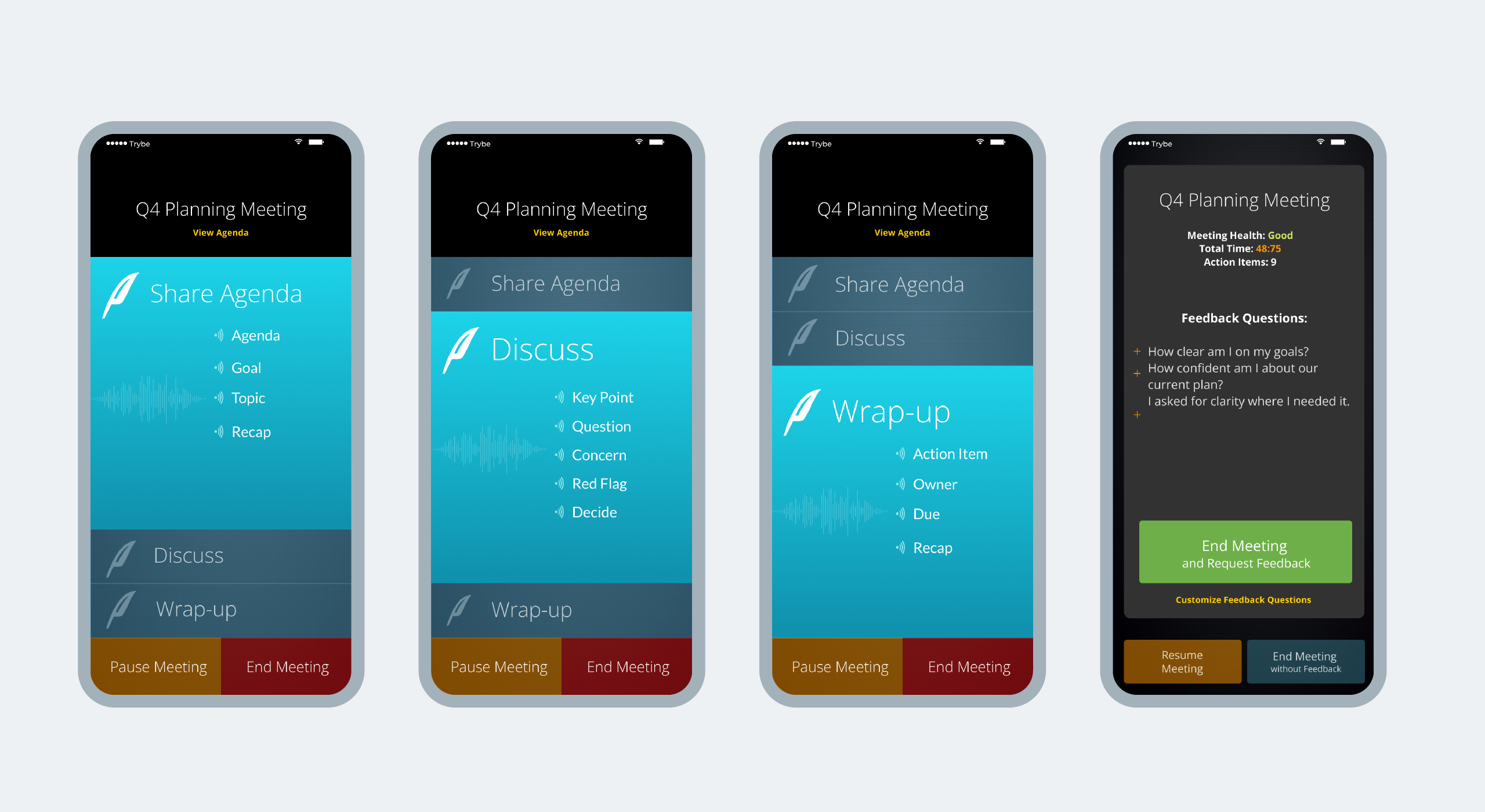
I designed the mobile app to be minimal with easy access points. Dark color scheme let the host glance at the screen without being obtrusive.

Run your meeting

We designed the interface to be inobtrusive, but still provide the cues the host needed to effectively run the app. Quick taps allowed the host to shift back and forth between milestones.
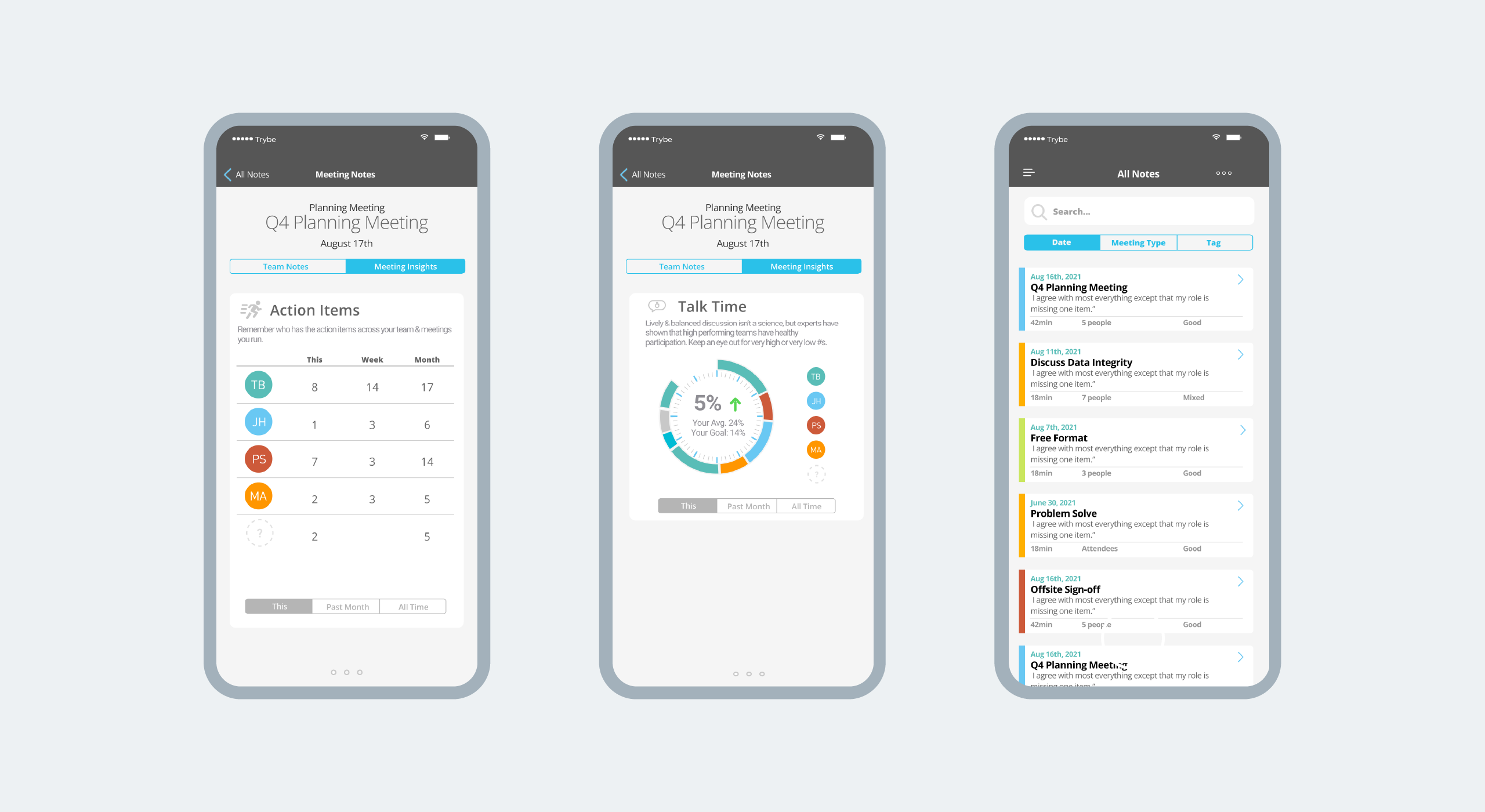
Post Meeting Analytics, where AII earns its place

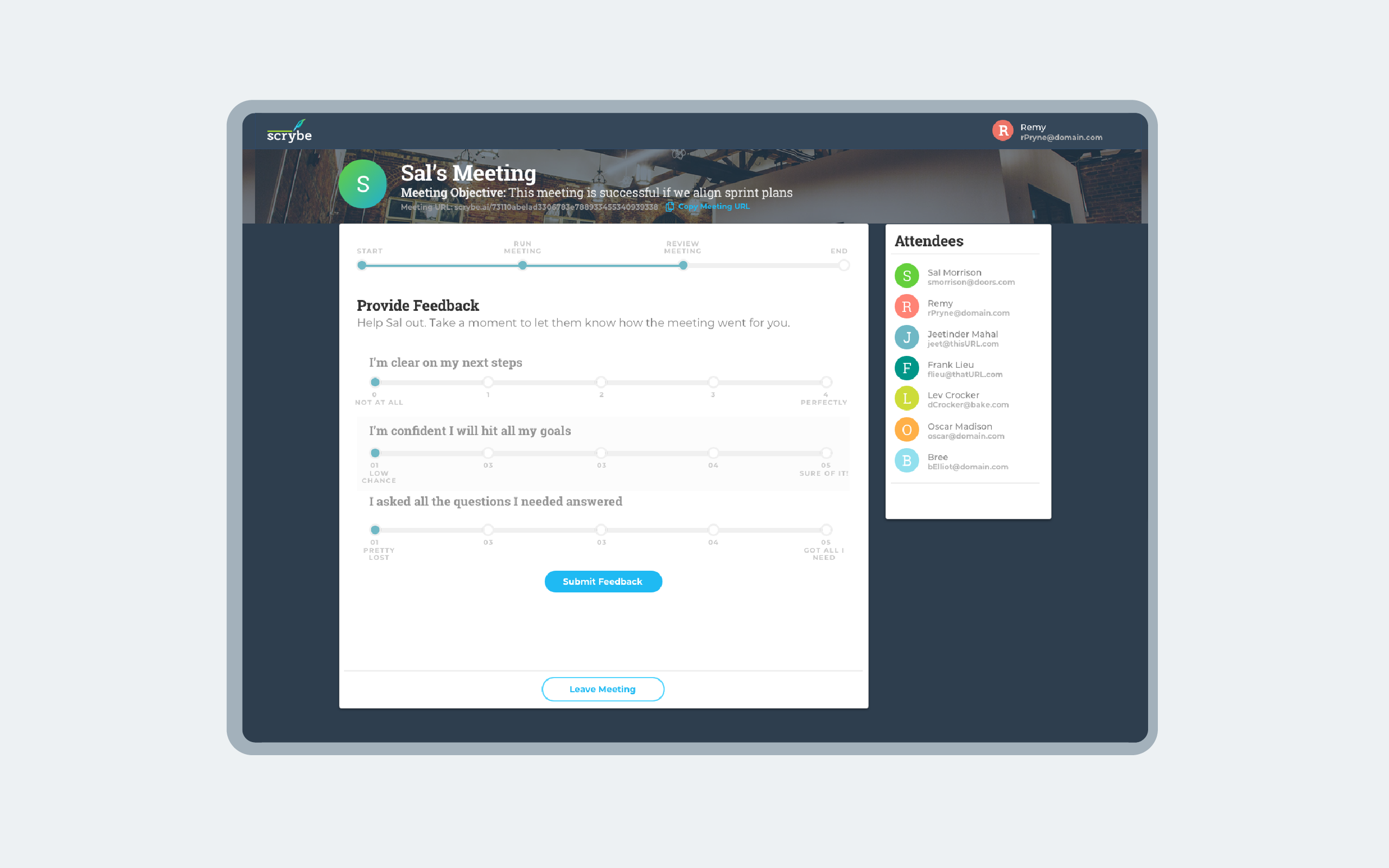
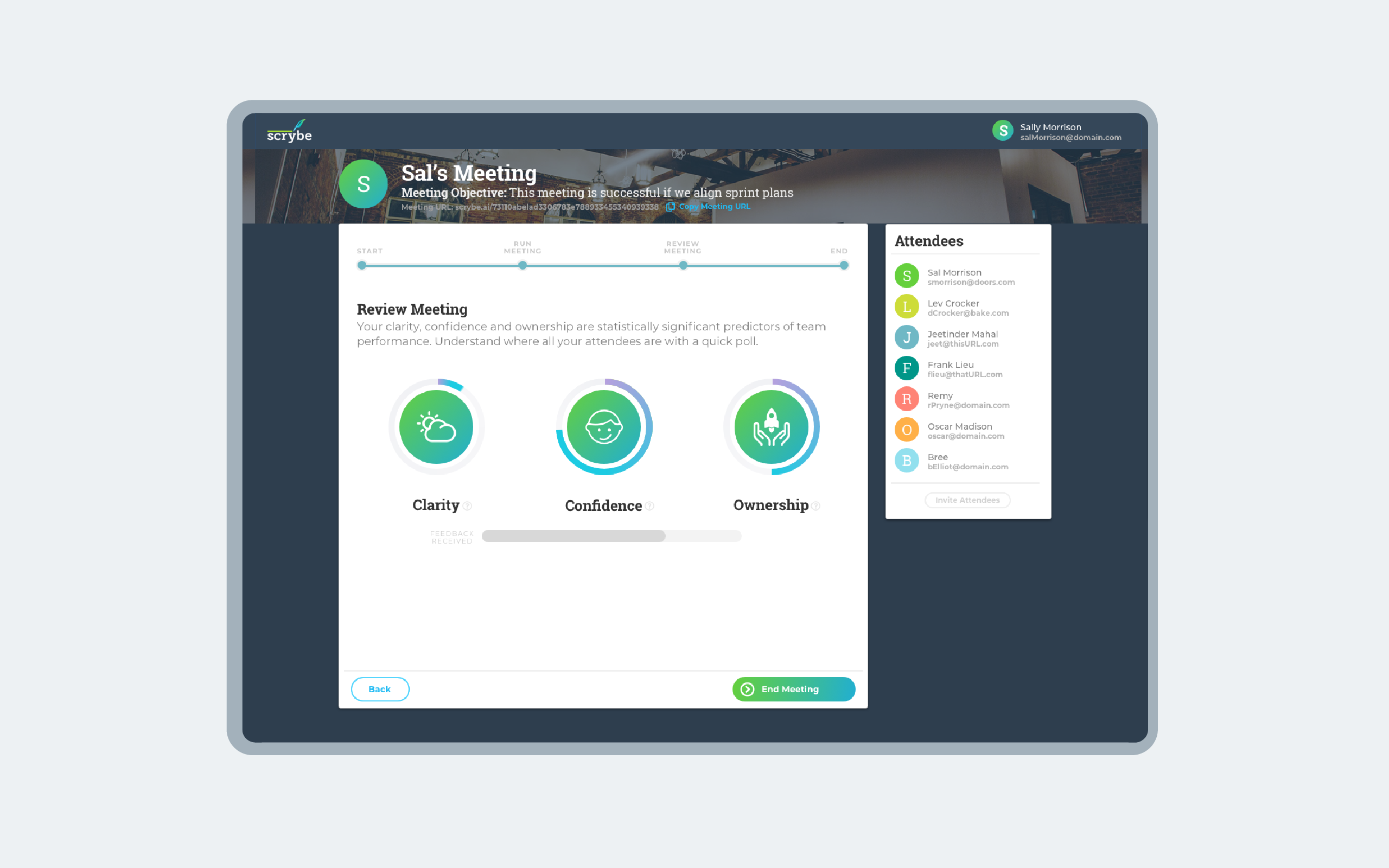
The conversation is data. Trybe scored engagement and team health, surfaced next actions, and tracked trends across past meetings so a manager could see whether they were actually getting better. This is the block the whole product was built to reach.
PART 4

Desktop Design

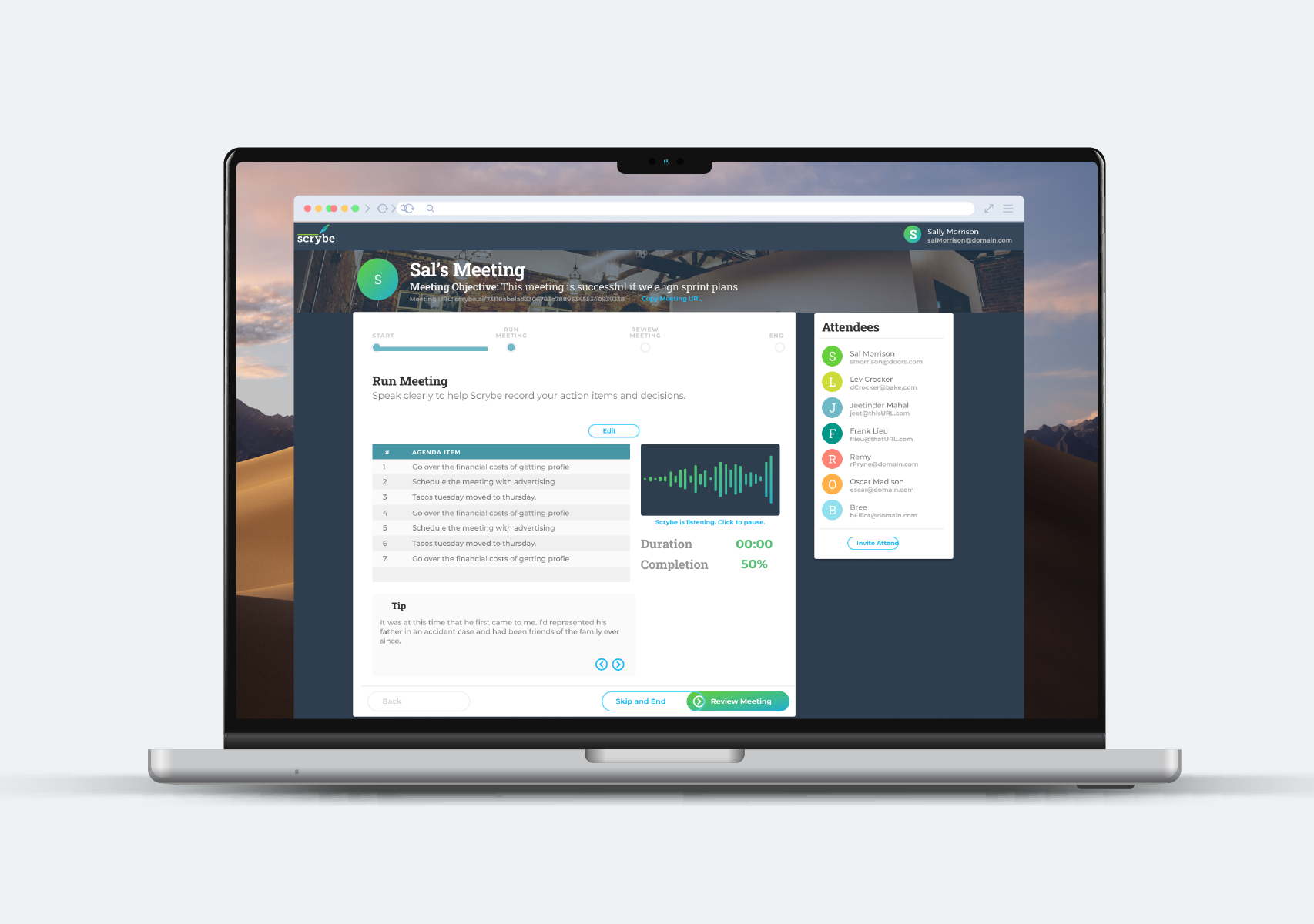
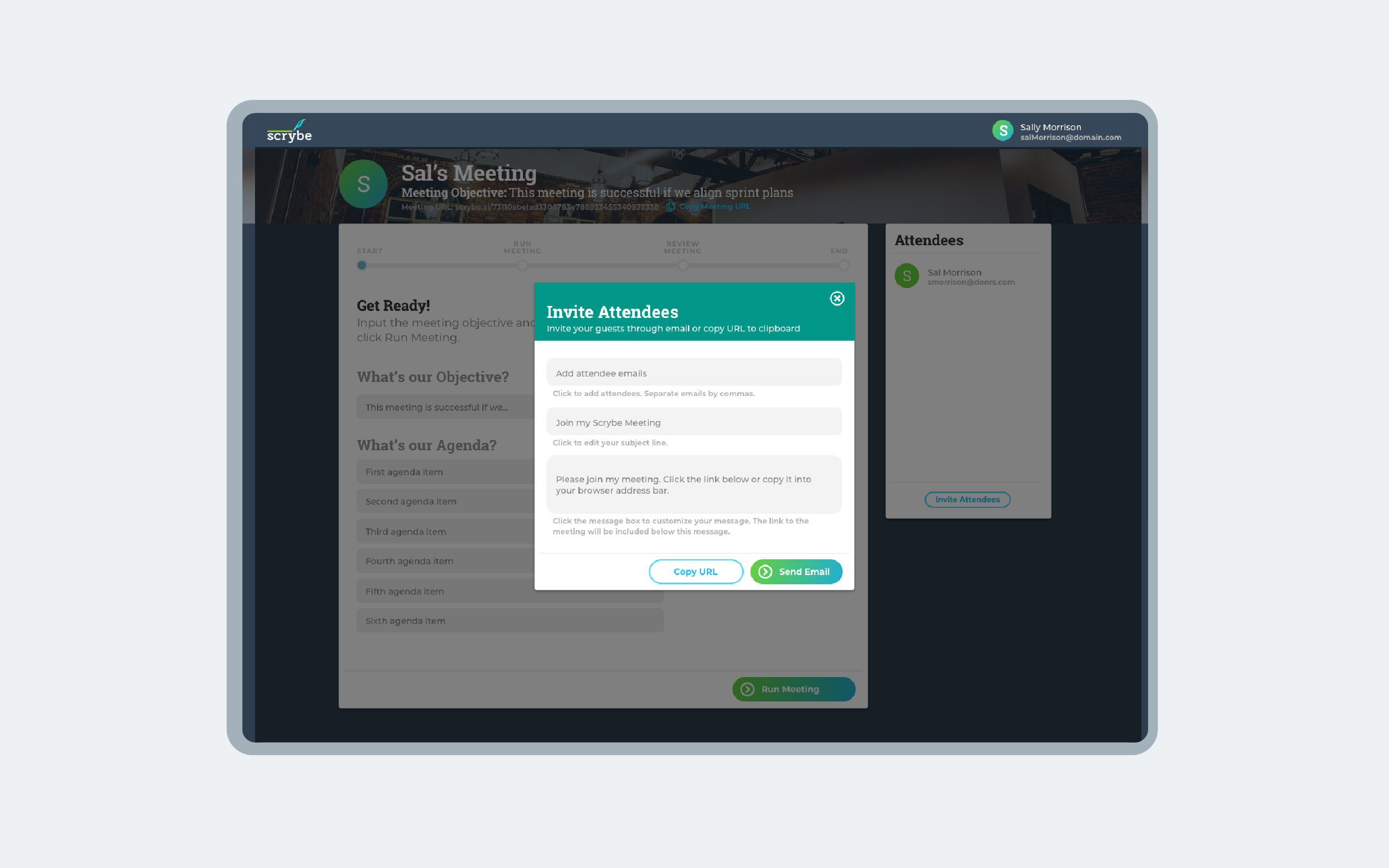
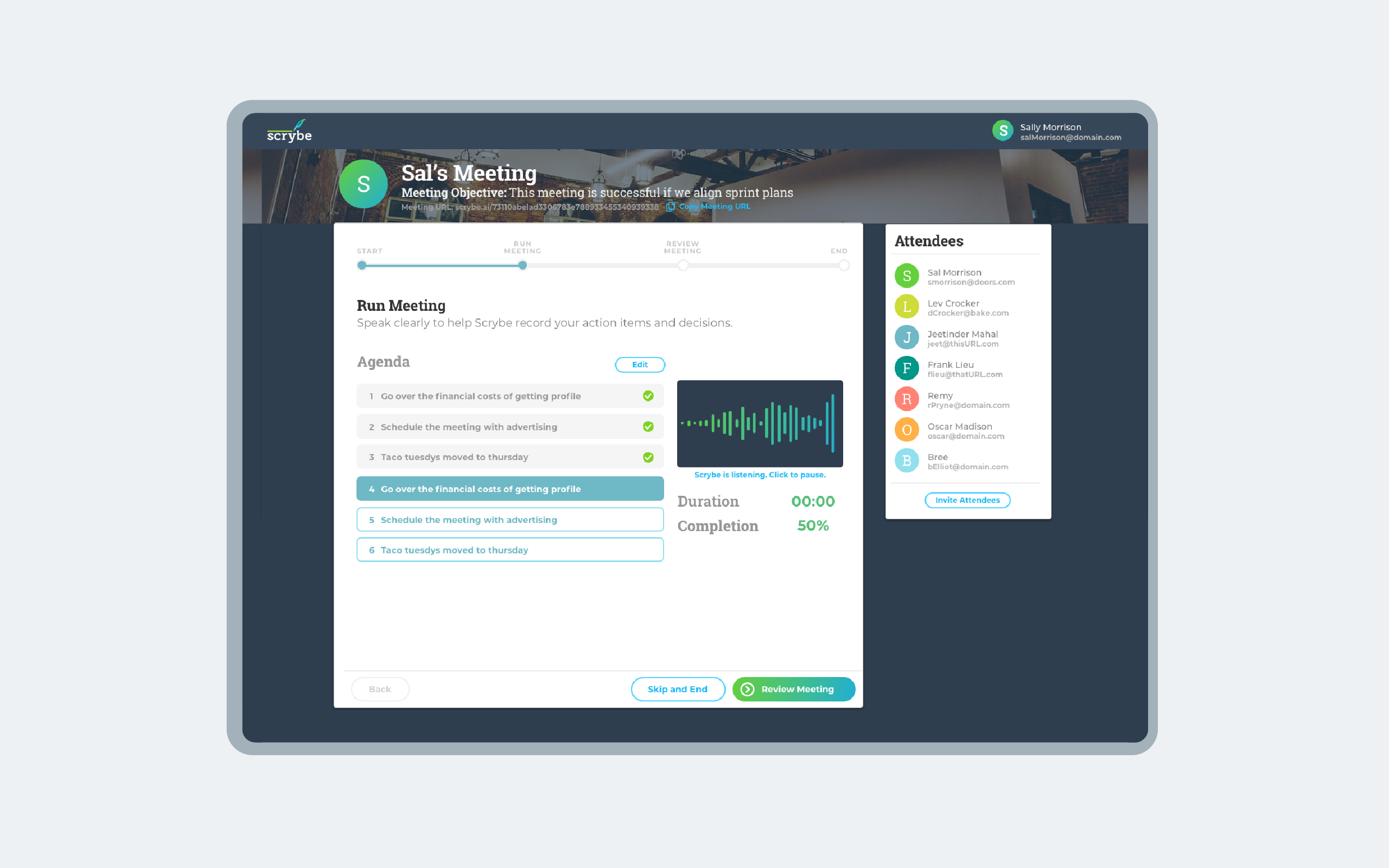
Desktop was the fastest road to a testable MVP. I designed the core flow that covered meeting initiation, scheduling and invitations, agenda definition, live recording, and analytics.
Creative

I developed branding and creative artifacts for the team to use with pitch decks, conferences and communications. Having a solid design helped to make the product feel more real for early testers.
Part 5

Results & Learnings

Results

  • Designed & delivered end-to-end user experience for mobile and desktop
  • Developed brand assets and artifacts for websites, pitch decks and marketing events

Learnings

  • Design sprints can create great excitement and uncover issues quickly
  • Its important that design & engineering speak directly to one another.
  • Given trust and autonomy, design can create new insights and inspiration